Claudia Bodeanu
- Clinical psychologist and clinical psychology supervisor
- Adlerian psychotherapist
- Occupational and security psychologist
- Psycho-oncology practice at MedEuropa Affidea
You are here for who you become in order to fly.
The mind behind safe flight
Flight experience and psychology together in the training of future pilots. We explore attention, judgement, communication, and the way we learn from each flight.
Discover AeroMind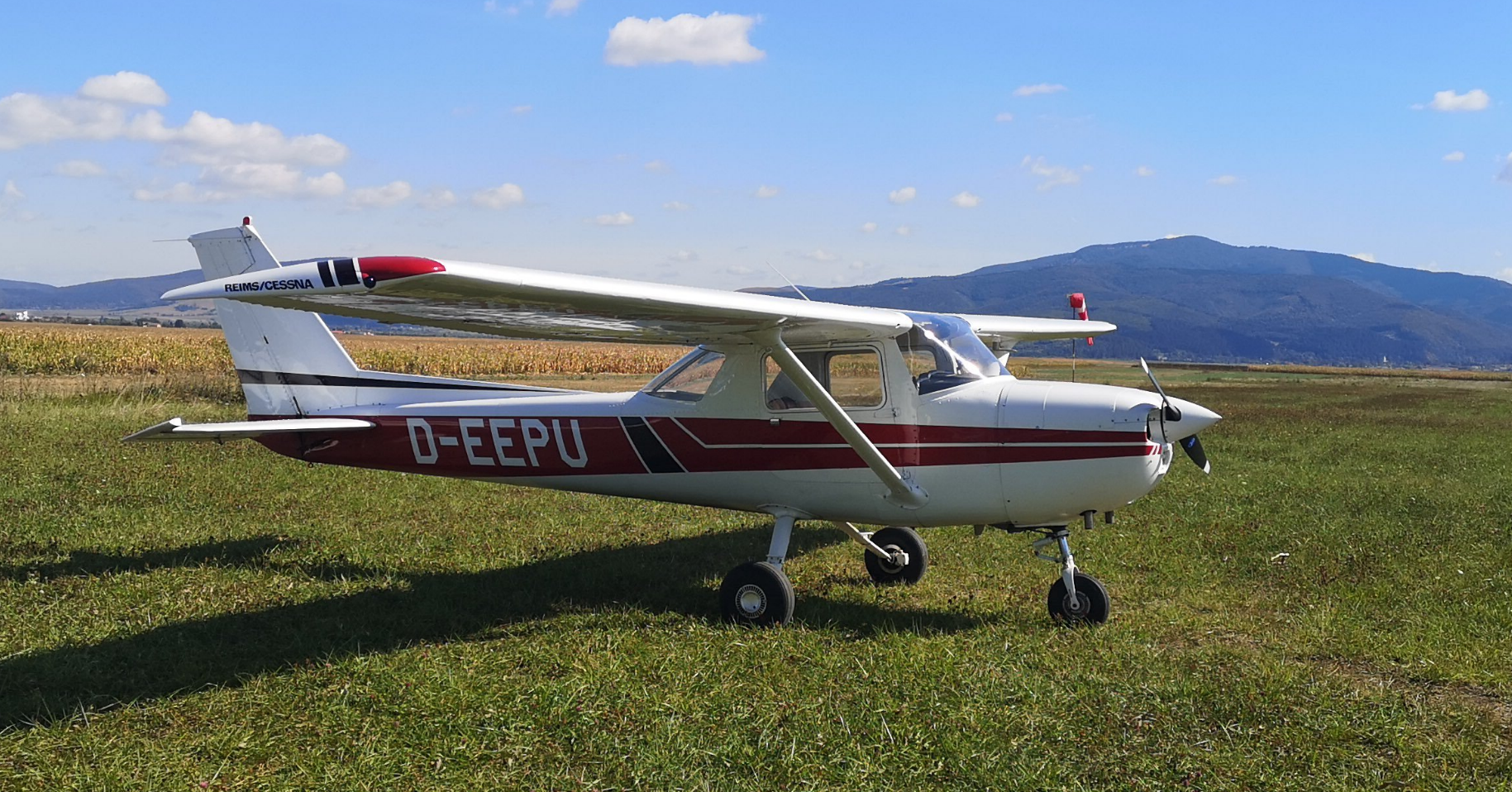
Claudia’s and Vlad’s independent psychology practices collaborate while retaining their respective specialties and responsibilities.
We explore attention, spatial memory, reasoning, pace of work, responses under demand, decision making, and communication. Assessment tools are selected for the question at hand.
The aircraft keeps us close to the real setting in which students learn to observe, decide, and work with an instructor. Its role in AeroMind activities will be described as those activities take shape.
At first, the question was how a person could control an aircraft. As flying became a complex system, another question emerged: how do people, procedures, and aircraft work together?
Orville and Wilbur Wright sought control around the aircraft’s three axes. On 17 December, Orville flew about 37 metres in 12 seconds; the last flight that day covered roughly 260 metres. Their achievement placed control of the aircraft at the heart of flight.
Charles Lindbergh flew alone from New York to Paris in the Spirit of St. Louis. Fuel tanks ahead of the cockpit blocked his direct forward view: he looked through a periscope or out of a side window. His achievement became emblematic of an era in which so much depended on the judgement and endurance of one pilot.
Amelia Earhart had made remarkable solo flights, but navigator Fred Noonan accompanied her on her final flight. They disappeared while trying to reach Howland Island. Their story brings navigation, communication, and the limits of available information into focus. The circumstances of their disappearance remain an open historical question.
During the twentieth century, the careers of military and airline pilots sometimes overlapped. Experience and discipline learned in one setting could be carried into the other. From a psychological perspective, this raises a question: how do authority, communication, and decision making adapt when the safety of an airline flight depends on the whole crew? This perspective traces how cockpit culture came under closer examination.
At Tenerife airport, two Boeing 747s, one operated by KLM and the other by Pan Am, collided. The KLM aircraft began its takeoff before receiving clearance while the Pan Am aircraft was still taxiing on the runway. In fog and airport congestion, the takeoff continued after the flight engineer asked about the other aircraft’s position. 583 people died. The case showed the importance of verification, clear communication, and the ability to challenge a decision in the cockpit.
A United Airlines DC-8 held for nearly an hour while the crew investigated a landing gear problem. Their attention to that problem displaced fuel monitoring. The engines stopped and the aircraft crashed near Portland; ten people died. The investigation highlighted the other crew members’ difficulty in clearly conveying the urgency of the fuel situation to the captain.
In 1979, NASA brought the industry together for a workshop on cockpit resource management. Training gradually expanded from CRM (Crew Resource Management), communication and crew decision making, to TEM (Threat and Error Management), threat and error management, and LOSA (Line Operations Safety Audit), structured observation of line operations. These are distinct concepts, all connected to understanding flight as a shared activity.
From the Wright brothers’ work on aircraft control to CRM, the view of safety came to include the people who operate the aircraft together.
Sources: Smithsonian · military and airline aviation · NPS · Wright flights · Smithsonian · Lindbergh · Smithsonian · Earhart · FAA · Tenerife · NTSB · United 173 · NASA · CRM.
With wings, nothing is heavy.
The beauty of flight begins with leaving the ground and seeing the world from a new perspective. The wish to go further encounters limits that you first learn to recognise.
What do I discover about myself when flying differs from what I imagined?
Dare to understand. Begin.
In our assessments, we have met students for whom the difficulty begins before the formula. Physics, aeronautical general knowledge, or even Bernoulli’s name can prompt an urge to close the book. Understanding starts when theory connects with the experience of flight.
What is the first question that helps me begin?
Do not touch me. How can I receive feedback as support for learning?
In the aircraft and during the debrief, learning happens with the instructor and others. A correction can touch the way I see myself. A different kind of courage begins here.
Can I let another person’s feedback help me grow?
In the aircraft you learn to read the sky, understand the principles of flight, and let others read you, too.
The path to flight also begins with meeting yourself.
We begin with their questions, pace, and experience. We discuss the findings together. The student chooses development steps and helps decide what to share with the school. We clarify confidentiality, safety, and, for minors, parental involvement from the outset.
We explore attention, memory, reasoning, personality, temperament, responses to stress, coping, and cooperation. We connect observations to the demands of training and turn them into goals the student can practise.
Conversations, clarifications, and lessons may cover meteorology, navigation, principles of flight, and Aircraft General Knowledge (AGK). We connect physics, thermodynamics, and trigonometry to flying. The student understands the material and discovers a way of studying that works for them.
A personal map for safe, lasting performance.
Some pilots called early CRM courses “charm school”. The field evolved toward observable behaviours and exercises closely tied to flying.
Source: Helmreich et al., FAA.
The student receives an explained picture of how they learn and a development path chosen in dialogue.
It brings observations from conversation and assessment together in a profile useful for training:
Aim: to understand existing resources and what calls for further practice.
It turns the findings into a few clear goals suited to the student's stage of training:
Aim: more aware, safer, and more consistent performance.
CRM — Crew Resource Management: communication, decision-making, and use of crew resources.
TEM — Threat and Error Management: recognising threats and errors and managing the response.
LOSA — Line Operations Safety Audit: structured observation of routine operations, highlighting the value of behaviour observed in context.
History and terminology: FAA — LOSA and TEM history.
For people entering aviation from age 16 who want to grow alongside their training.
For future ultralight pilots: understanding the principles of flight, their own attention, and how they learn.
For students pursuing a private pilot licence and developing knowledge, judgement, communication, and cockpit habits.
For those choosing a modular or integrated professional ATPL pathway and developing cognitive strengths and crew skills.
We work with people aged 16 and above. For flying, the medical certificate depends on the pathway: ULM also accepts LAPL; PPL requires at least Class 2, and professional licence privileges require Class 1. We discuss these requirements at the start.
References: Romanian ULM rules · EASA Part-MED.
Tell us where you are in your flight training and what you would like to understand or develop.